Yara Akkari
What makes Asia special to them: adventures and tips from interesting people with ties to the region
Conversations with friendsYara Akkari is the founder of Open Spaces Magazine in Japan.
Yara Akkari approaches travel the same way she approaches storytelling: by paying attention to the quiet details that reveal how people live, create, and connect. Her perspective is shaped by years of moving between cities, building community through Open Spaces Magazine, and seeking out places that feel grounded, intentional, and human. She gravitates toward design-forward stays, thoughtful food, and the kinds of encounters that happen when you slow down and let a place unfold naturally. At its core, her way of traveling is about curiosity — following what feels honest, meaningful, and alive — and letting those moments shape the journey more than any checklist ever could.

Sophia first connected with Yara in Brooklyn at a party celebrating the second issue of her magazine, Open Spaces. Yara has shaped the publication into a thoughtful blend of art, design, travel, and the outdoors. With a mother who grew up in Japan, she developed an early love for the country — one that has taken her back countless times. We spoke with Yara about the ways she weaves art and nature together in Japan.
Q&A with YARA aKKARI
Q: After a day of being in nature and taking in art in Japan, what is your favorite way to relax?
A: I recall having our own little private open-air bath at the Roka Hotel in Naoshima. It was honestly the best way to relax, before heading to dinner and enjoying a glass of sake.
—
Q: What are your favorite accommodations in the Seto Inland Sea?
A: I think that although it is known by everyone, there is something special about Bennesse House. The idea of sleeping in a museum, and being able to visit some of their galleries at night, before or after dinner, is magical.
—
Q: What are your dream experiences that combine art and nature in Japan?
A: Most of them are somehow immersive experiences, which I love. I really enjoyed the Lee Ufan Museum, as well as the Naoshima Bath and finally the “Foret des Murmures” on Teshima island, where you basically just hear the sound of the wind chimes in the forest. Simple yet so powerful experience.
—
Q: Having been to Japan so many times, where are the places that really stand out to you?
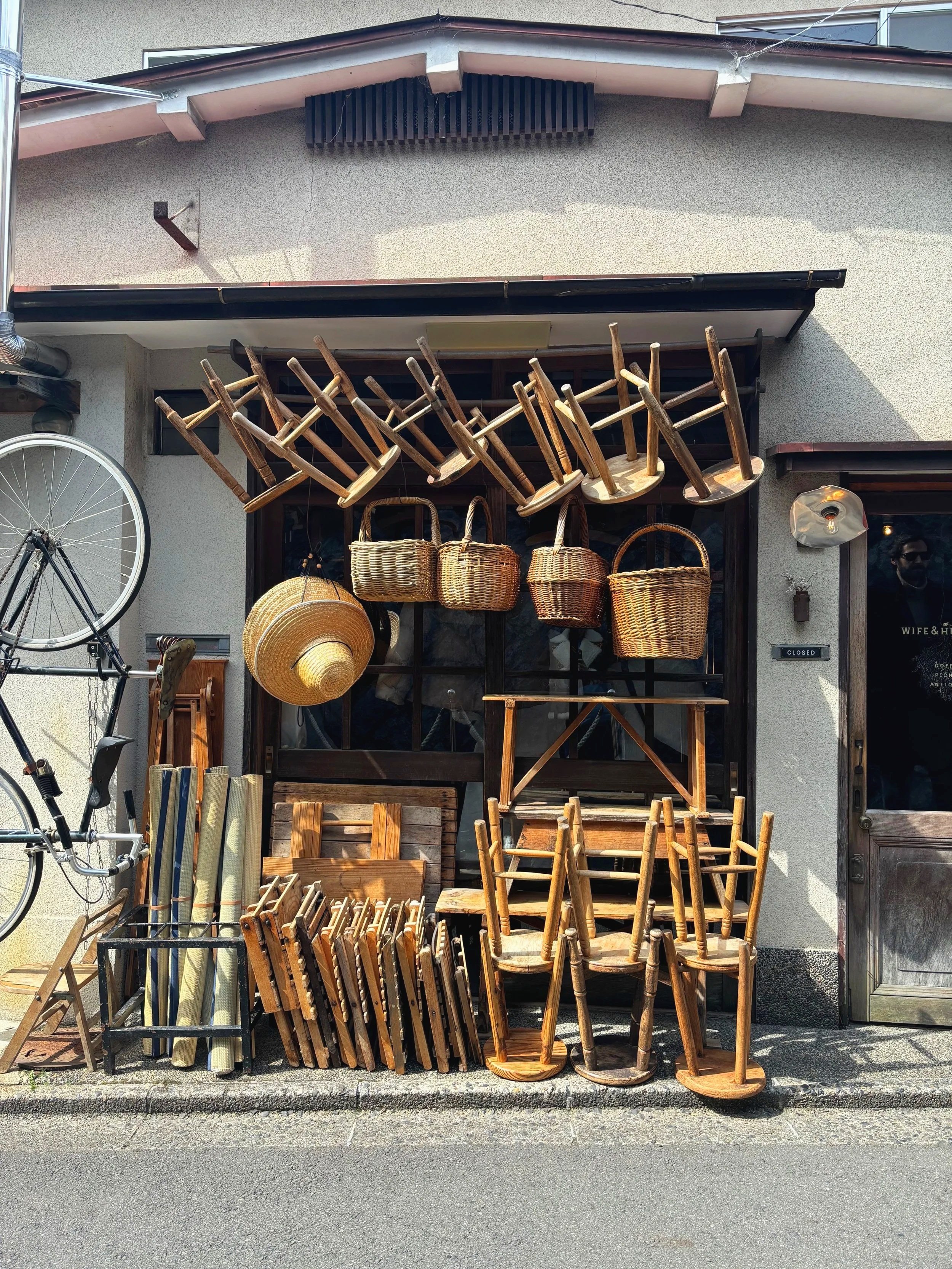
A: I think Kyoto, although can be packed, still holds a lot of magic - from the temples, to the small coffee shops - I enjoy and always discover a new place. Some of my favorites from my last visit was “Stardust” which is a shop and a cafe, and right next to it, there is a florist, that looks more like a flower museum than an actual florist! I was also amazed by the visit of the ceramic artist Kawai Kanjiro’s house. Apart from Kyoto, I think that the city of Kobe really grew on me. I recommend the Onsen called REN, as well as the famous “tool museum”, the Takenaka Carpentry Tools Museum. A gem!
—
Q: Finally, we always ask: What’s your favorite souvenir that you have brought back from Japan?
A: Ceramics and FOOD!! Always Food (omochi, osembe, castella...) :) And a Gin bottle from a distillery we discovered this time in Niseko (OHORO gin), voted one of the best gins. Surprisingly good.
Q: You featured an article about slowing down the pace in Okinawa for Issue 4. What drew you to feature the island, and what advice do you have for travelers who want to immerse themselves in the outstanding nature the islands have to offer?
A: Okinawa is considered a “Blue Zone,” meaning it must hold a secret of longevity! Okinawans repeat a 2,500-year-old mantra, “Hara Bachi Bu,” which reminds them to eat mindfully and stop eating when they are 80% full. In our 4th issue, the photographer, Kate Berry, traveled to Okinawa after discovering a wooden Airbnb in the island's southeastern province. As a result, she spent 4 days discovering the island, biking her way, and discovering places, eating a mostly plant-based diet, and also just relaxing, immersing herself in the life of the island.
—
Q: What was it like exploring the Art Islands?
A: I visited Naoshima island twice, I personally was really touched particularly by the Art House project in Honmura district. Going from one house to the other, walking through the Honmura district where everyday life unfolds around us, and we can not only engage with the art but also get a sense of the local community and how local people on the island live.
—
Q: Within the Seto Inland Sea, where are places for travelers to experience art outside of Naoshima?
A: I recently went to Teshima Island, where I took a bike and cycled through the island, discovering the different art sites. I also discovered a local sake-making distillery that makes sake from grapes! As well as a small coffee shop where the owner makes her own bread and pastries to go or to enjoy on-site. For me, there is the art on these islands, but also everything else you can do, hiking, eating, or just enjoying the beach!